[ CCode ( type_id = "mks_session_get_type ()" ) ]
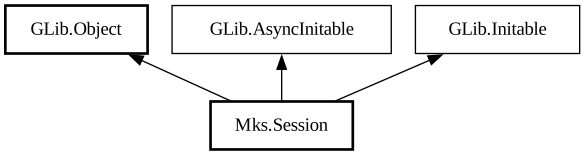
public sealed class Session : Object, AsyncInitable, Initable
Session
Object Hierarchy:
Description:
Session connected to a QEMU VM
The `MksSession` represents a connection to a QEMU VM instance. It contains devices such as the mouse, keyboard, and screen which can be used with GTK.
You may monitor [property@Mks.Session:devices] using [signal@Gio.ListModel:MksSession:items-changed] to be notified of
changes to available devices in the session.
Connecting To QEMU
To use `MksSession`, you should create your QEMU instance using `dbus` for the various devices that support it. You'll need to provide your P2P D-Bus address when connecting to QEMU.
Using the same [class@Gio.DBusConnection], create a `MksSession` with [func@Mks.Session.new_for_connection]. The `MksSession` instance will negotiate with the peer to determine what devices are available and expose them via the [property@Mks.Session:devices] [ iface@Gio.ListModel].
Creating Widgets
You can create a new widget to embed in your application by calling [method@Mks.Session.ref_screen] and set the screen for the [ class@Mks.Display] with [method@Mks.Display.set_screen].
Namespace: Mks
Package: libmks-1
Content:
Properties:
Creation methods:
Methods:
Inherited Members:
All known members inherited from class GLib.Object
All known members inherited from interface GLib.AsyncInitable
All known members inherited from interface GLib.Initable