[ CCode ( type_cname = "GActionInterface" , type_id = "g_action_get_type ()" ) ]
public interface Action : Object
Action
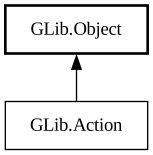
Object Hierarchy:
Description:
`GAction` represents a single named action.
The main interface to an action is that it can be activated with [method@Gio.Action.activate]. This results in the 'activate' signal being emitted. An activation has a `GVariant` parameter (which may be `NULL`). The correct type for the parameter is determined by a static parameter type (which is given at construction time).
An action may optionally have a state, in which case the state may be set with [method@Gio.Action.change_state]. This call takes a [ type@GLib.Variant]. The correct type for the state is determined by a static state type (which is given at construction time).
The state may have a hint associated with it, specifying its valid range.
`GAction` is merely the interface to the concept of an action, as described above. Various implementations of actions exist, including [ class@Gio.SimpleAction].
In all cases, the implementing class is responsible for storing the name of the action, the parameter type, the enabled state, the optional state type and the state and emitting the appropriate signals when these change. The implementor is responsible for filtering calls to [method@Gio.Action.activate] and [method@Gio.Action.change_state] for type safety and for the state being enabled.
Probably the only useful thing to do with a `GAction` is to put it inside of a [class@Gio.SimpleActionGroup].
All known implementing classes:
Namespace: GLib
Package: gio-2.0
Content:
Properties:
Static methods:
Methods:
Inherited Members:
All known members inherited from class GLib.Object