[ CCode ( type_id = "gdk_screen_get_type ()" ) ]
public class Screen : Object
Screen
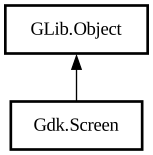
Object Hierarchy:
Description:
Screen objects are the GDK representation of the screen on which windows can be displayed and on which the pointer moves.
X originally identified screens with physical screens, but nowadays it is more common to have a single Screen which combines several physical monitors (see get_n_monitors).
GdkScreen is used throughout GDK and GTK+ to specify which screen the top level windows are to be displayed on. it is also used to query the screen specification and default settings such as the default visual ( get_system_visual), the dimensions of the physical monitors ( get_monitor_geometry), etc.
Namespace: Gdk
Package: gdk-3.0
Content:
Properties:
Static methods:
Creation methods:
Methods:
Signals:
Inherited Members:
All known members inherited from class GLib.Object