[ CCode ( type_id = "atk_action_get_type ()" ) ]
public interface Action : Object
Action
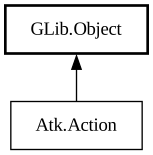
Object Hierarchy:
Description:
The ATK interface provided by UI components which the user can activate/interact with.
Action should be implemented by instances of Object classes with which the user can interact directly, i.e. buttons, checkboxes, scrollbars, e.g. components which are not "passive" providers of UI information.
Exceptions: when the user interaction is already covered by another appropriate interface such as EditableText (insert/delete text, etc.) or Value (set value) then these actions should not be exposed by Action as well.
Though most UI interactions on components should be invocable via keyboard as well as mouse, there will generally be a close mapping between "mouse actions" that are possible on a component and the AtkActions. Where mouse and keyboard actions are redundant in effect, Action should expose only one action rather than exposing redundant actions if possible. By convention we have been using "mouse centric" terminology for Action names.
All known implementing classes:
Namespace: Atk
Package: atk
Content:
Methods:
Inherited Members:
All known members inherited from class GLib.Object